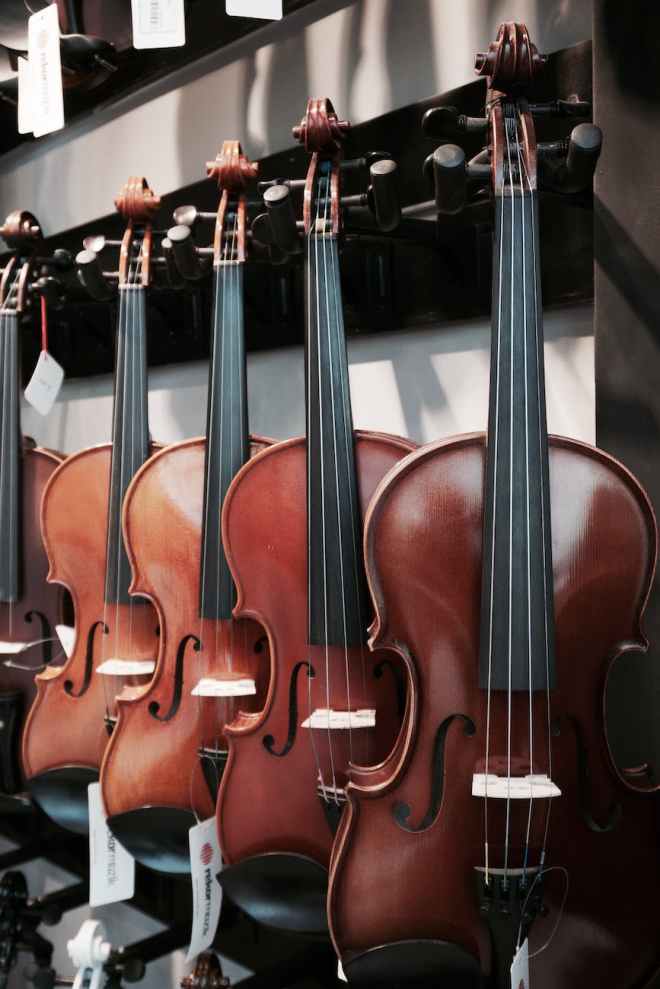
A disheartened remark from one of my mentees this week. How many times has one felt that loneliness in their field of research; a lack of enthusiasm and appreciation from scholars in proximity, or even a sceptic look from those you respect: ‘what good could come out of this enquiry?’ As my mentee is a prospectus PhD student, this blog will attempt to confront these challenging moments of doubt most relevant for his stage with three key summary points.
- Building your network
Knowing what you want to research is a good start, and great if you have found a topic that very few have marginally explored, and sources that are untouched. However, the truth is, for a topic as niche as ‘making violins’, it might not draw immediate attention to most supervisors, for reasons of interest or expertise. If one hasn’t already done this already, it is so important to read on scholars that have done research on the topic in their field, and see if they are supervisors, where they did their doctorate, and who their supervisors are. What is a field? Who big is a field? Too often our vision of a research field is swung drastically between a fish-tank and a football pitch. It is easy to disregard the things in between: for violin organology, why not extend the field to those who research in keyboard organology? And if it is a particular violin maker who worked with famous violinists such as Paganini, why not approach scholars who have analysed Paganini’s performance traditions?
Thus, when one comes to writing speculative emails ‘dear potential supervisor X’, why not say ‘I really like the work you have done on so-and-so and I think this will be a great help to the project I am planning do about …’. It is connecting to other’s research and spelling out how they can help, instead of guess work. From time to time, you will get emails back saying, ‘sorry not interested’, or no email responses at all. The worst is when you get emails criticising your ideas. Nevertheless, there are plenty of great supervisors out there who will reach out, and conversations begin there. Eventually, the ‘doctor’ is the expert in their own project, not their supervisors, nor the examiners.
- Know your strengths… and weaknesses
At PhD stage, you are acquiring the skills as a researcher. That means where you look for sources, how you select them, and critically analyse and evaluate them, and make compelling conclusions & findings. You will have plenty times afterwards to pursue research projects, and so doing something difficult as a PhD project – well that is something to think over. One of topics I would want to eventually research about is religious connotations in instrumental repertoire. But I didn’t choose to do this as my PhD project, – on top of building up academic competency, I would have to be equipped with philosophy and theology books, and not very much time for piano practice. I am grateful for my master’s supervisor for speaking reality: ‘if you applied for a DPhil in Oxford, you are likely to have to give up 4 years of playing the piano, is that what you want?’ Eventually, I pursued doing a doctoral project that I was very fond of and was able to complete on time.
This is not to say that you should only do what you are good at. No, it is a matter of seeing how you can invest in your project with skills you already have with skills you are going to develop. Just to say here, my mentee is a conservatoire-trained violinist with a degree in violin making, so he is more than capable to start a project on making violins from a performer’s perspective. Yet, the journey has only began, and how his project develops (more geared towards acoustics or musicology) depends on where and who he studies with, and so develops his skills and knowledge to becoming the expert. Is it too much to ask him to programme a digital violin? Maybe, maybe not.
- History merely repeats itself. It has all been done before. Nothing under the sun is truly new. Sometimes people say, “Here is something new!” But actually it is old; nothing is ever truly new. Ecclesiastes 1:9-10
Is it true that no one is interested in making violins? No, otherwise the violin would not have existed. If the record isn’t on the internet, look in books, journals, newspapers, outside academia to magazines, concert programmes. It is comforting to know that there are people (historically and currently) that share similar interests. Though, the problem then being the feeling that everything that needs to be said have been said, a situation that my opera-scholar friend finds in her field. What can we do? Well, at the very least, we can hand-pick sources and renew them.
 Joyce Tang