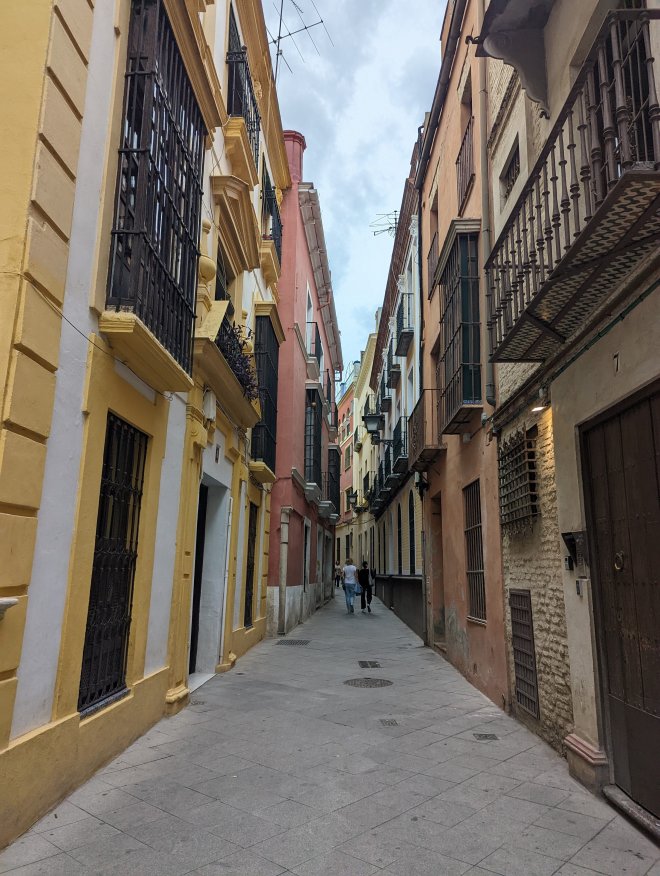
This week I am in Andalusia! It is my first time in Spain, and the reason I am here is to prepare some footages for my podcast (Finding Pieces, coming soon!). I have been practising some pieces from Albeniz’s Iberia, and this is a fantastic opportunity to understand the music better through immersing in its source of inspiration: the culture, the landscape, the language… and food!
Some performer thoughts: How do we as performers unravel a composer’s intention through their music, and interpret what they once saw?
Interpreting a piece music is an unconscious effort for any performer. We use the word ‘interpret’ to mean a way of narrating from our own perspectives explanations about things that we see, hear, smell, touch, and taste. Music is something we hear, but the inspirations on musical compositions can be multi-sensorial. The act of ‘interpreting’ a composition involves the performer telling through playing the music a story, convey a message, or emotion. Shakespeare’s famous quote in Twelfth Night depicts this: ‘if Music be the food of love, play on’, Orsino tells the musicians to keep playing the music so that he can overdose in his yearning for love.
One of the definitions for the word ‘interpretation’ in Google’s English dictionary is ‘a stylistic representation of a creative work or dramatic role.’ This means for the performer (interpreter) to get closer to a composer and their work, becoming more sensitive to and aware of its nuances. Stylistic representation involves both technical and artistic inputs. My younger pupils have often buzzled with the ‘whys’ when it comes to stylistic mannerisms: why play the crotchets separated? Why start on the upper notes of a trill or mordent? Why can’t I use the pedal? Why can’t I arpeggiate this chord? A simple ‘just do this because I told you so’ doesn’t quite satisfy the curiosity of a 7-year old, and it shouldn’t. The answer to these questions are complicated; years of research, prolonged debates amongst scholars and musicians, only to conclude ‘it depends’.
Can we really fully grasp another being’s intentions? No. We can get close to it, but ultimately, we will still be a separate being trying to shadow someone else’s ideas and ideals. In the latter half of the twentieth century, performers became obsessed with claiming authentic-ness over how music of past centuries (17th and 18th century in particular) should be interpreted, which caused an upheaval amongst musicologists and became a topic of much debate – even until now. For the purpose of this blog, I will not go too much into the notion of ‘authenticity’: that will be a long piece of writing for another day.
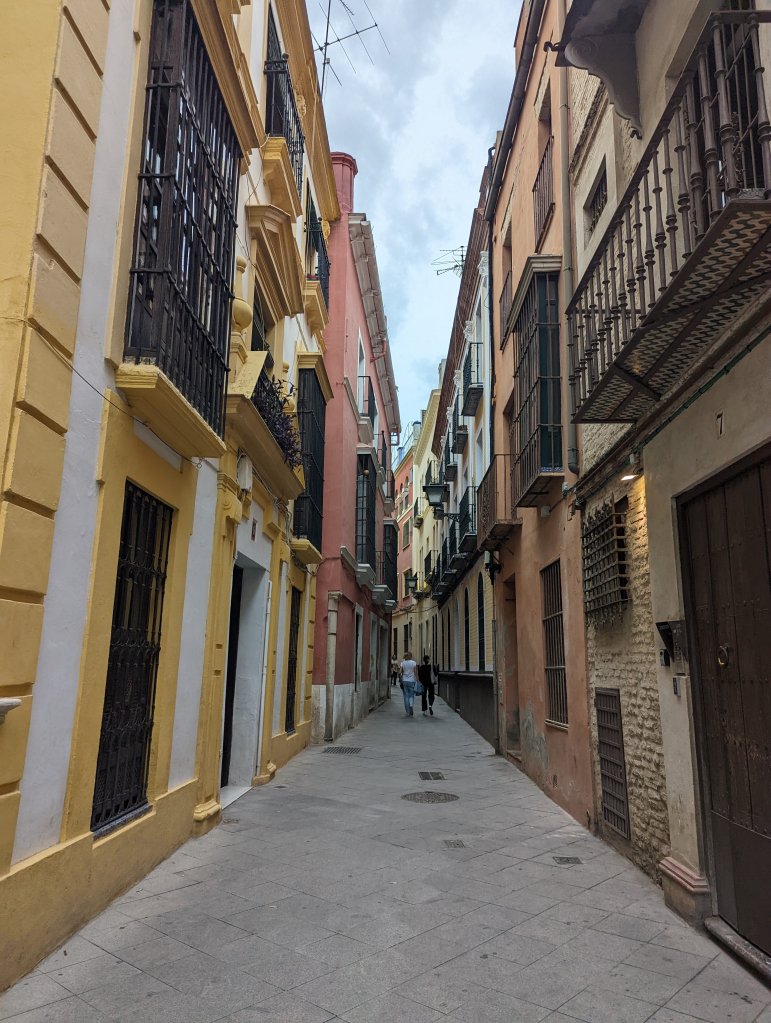
So how do performers interpret music? We look for clues on the score: the staccato, legatos and agogic accents; the pp, mf, sfz; the rhythm of notes, words, text; all of these are clues to depict something, to draw a picture. But what is that picture we are trying to paint? Here’s where we need inspiration. In my case, I have been practising Triana for a while now, and I know that Albeniz’s source of inspiration for this composition is from what he saw in Seville, in particular the flamingo dancing and the colourful houses. Admittedly, I was suspicious: Albeniz composed these pieces over 100 years ago, the place, people, and to some extent the food and even language is not what it once was. Nevertheless, I spent 2 days in Seville, and the sceneries I saw totally transformed and enriched my understanding of the piece. Now when I play the ascending quick arpeggios, I have in my head the woman’s foot tapping away to music in Plaza de España. When I play the changing harmonies bar to bar, I visualise the houses on C. Rodrigo de Triana. It was as if the music came to life for me.
Places are one source of inspiration, but music derives itself from many inspirations. When was the last time you were inspired by something about a piece of music you are working on? Share your thoughts below.
 Joyce Tang