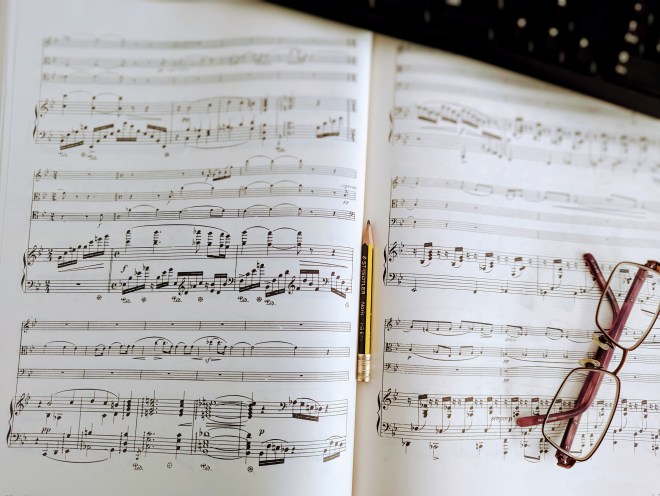
Most words that end in -ology denotes a subject of study or interest, or a branch of knowledge. Musicology can be interpreted in the same regard. “What do you mean? What do you study in music? Where can you work as a musicologist?” These are very good questions often left unasked, even by musicians themselves. This post will begin to explore the term musicology and the avenues on which music is investigated, and then outline some of the job opportunities for a musicologist.
A bit of history: the word musicology is a century-old coinage that can be traced to the nineteenth-century German Musikwissenschaft, which means ‘to cover thinking about, research into, and knowledge of all possible aspects of music’.[i] All-encompassing this may be, musicological pursuits in both academic and broader general use throughout the twentieth century turned out to be rather straitened – studies on the history of western elite-art music (renaissance to pre-1900). It was, (and still is to an extent), a distinct category to Theory, Ethnomusicology, and Performance: theorist are preoccupied with understanding about the structure of music; ethno-musos study about music other than those of western elite-art; and performers, well, they play music. There is plenty of overlaps across these disciplines, so Joseph Kerman in his book 1985 Musicology urges us to not define them in terms of ‘subject matter’ but instead as ‘philosophies and ideologies’.[ii] His was a timely advice.
With music inquiries sprawling out in all directions, current perspective on musicology has reverted back to its original and comprehensive mission, that is, the scholarly inquiry of ‘all aspects of music in all cultures and all historical period’.[iii] Despite their broad statement, the American Musicological Society still deems music performances as separate matters, ‘although the study of music performance is an important facet of musicology, music performance itself is a different area of study.’[iv] But what about the rising number of researchers who are in themselves performers, and have used their own performing skills as also a process in the research enquiry? Can musicians be also musicologists? More posts to follow on this subject.
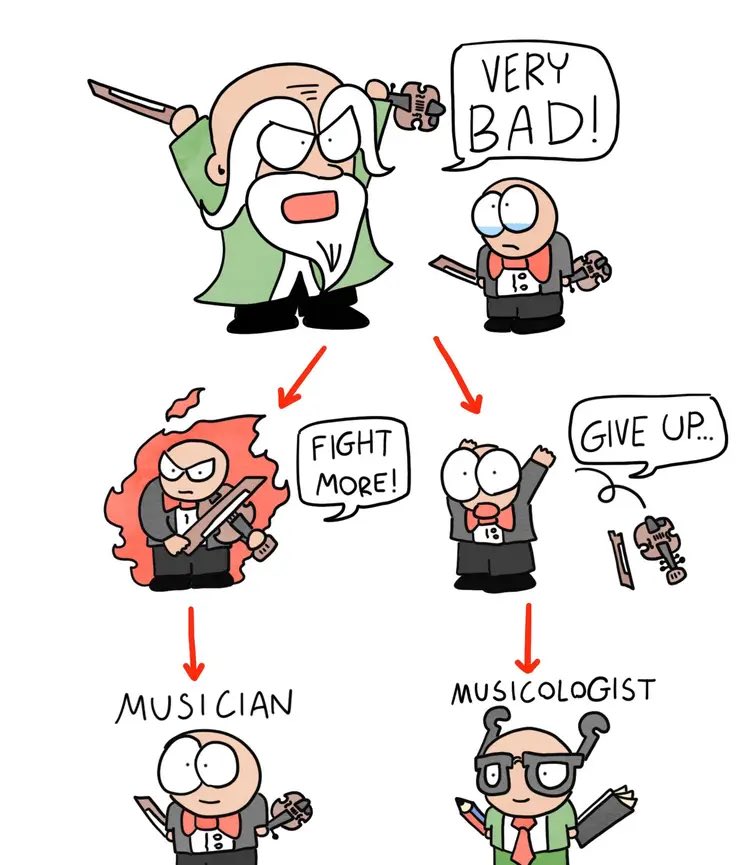
Career advice for a musicologist
There are plenty employment opportunities for musicologists beside those as lecturers / researchers at universities. Here are a few suggestions:
- Curatorship at museum, libraries & archives.
- Teaching positions in educational institutions other than universities: high schools, prep schools, evening colleges, short online courses platforms.
- Administration, management, publication in the arts: concert halls, symphony orchestras, publishing firms, recording labels.
- Digital music publishing: radio, podcasting, journalism.
- Freelance writer: working in researcher centres, music critiquing, concert programmes.
Are you a musicologist? And what do you do? Please do leave a comment below.
[i] Pratt, Waldo S. (1915). ‘On Behalf of Musicology’, The Musical Quarterly, 1(1), 1–16.
[ii] Kerman, Joseph (1985). Musicology. London: Fontana Press/Collins, 13.
[iii] American Musicological Society, ‘What is Musicology?’, https://www.amsmusicology.org/page/whatismusicology, consulted on 17/08/22.
[iv] Ibid.
 Joyce Tang